A college backpack wholesale supplier should be vetted around commuter use, program repeatability, and the information needed to approve a specification—not around a seasonal school-bag launch date. Start with a one-page buyer brief, request a sample against that brief, and compare suppliers on the same construction, documentation, and production questions. This keeps a college or adult-commuter range distinct from a seasonal back-to-school backpack manufacturer wholesale program.
Start With a Buyer Brief, Not a Catalog
Before requesting quotes, define the user and selling channel. A campus-bookstore assortment, a corporate-campus giveaway, and a commuter-focused private-label line can share a backpack silhouette but need different pocket layouts, branding, packaging, and approval steps.
Use this brief for every supplier:
| Decision | What to state in the RFQ | Why it matters |
|---|---|---|
| Intended user | College commuter, adult commuter, campus retail, or promotional distribution | Keeps the specification separate from a younger-child or seasonal school range |
| Carry setup | Laptop sleeve dimensions, book capacity, bottle pocket, organizer needs, and target bag dimensions | Lets suppliers quote the same internal layout |
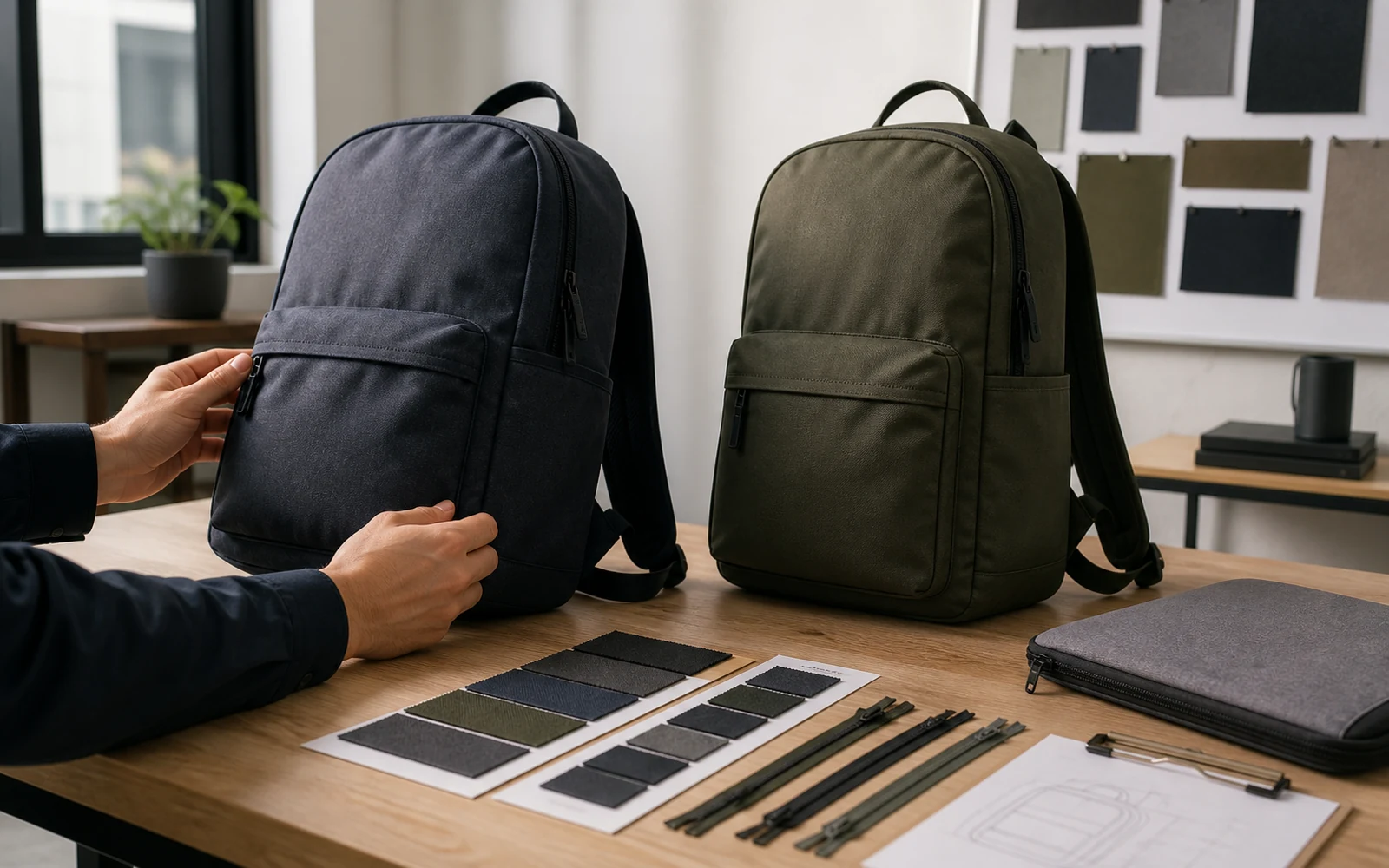
| Exterior and lining | Preferred fabric family, coating requirement if any, lining, colorway, and artwork method | Prevents a sample from being approved against an unclear material brief |
| Construction | Strap attachment reinforcement, back-panel structure, base construction, zipper and pull requirements | Makes the load-bearing details reviewable at sample stage |
| Brand and packaging | Logo application, label position, hangtag, polybag or retail packaging needs | Identifies light customization versus a development-led project |
| Market scope | Destination market, intended age range, and any buyer-required documentation | Enables a supplier to identify which documents or testing scope must be confirmed |
For an initial program, specify what is essential to the user experience and mark everything else as optional. A supplier can then show where a simpler build may be appropriate and where a material, hardware, or pattern change needs a new sample.
College and Commuter Construction Checklist
College buyers normally need daily organization and a consistent silhouette across colorways. Ask to review these points in the sample rather than treating them as assumptions:
- Laptop and document space: Confirm the buyer's required device dimensions and whether the sleeve, divider, and access opening match the approved pack layout.
- Shoulder straps and back panel: Review foam feel, strap geometry, binding, and the reinforcement approach at the strap anchors. The right construction depends on the intended load and user profile.
- Base and high-wear areas: Check the bottom panel, front-pocket corners, handle attachment, and any seams that will be repeatedly loaded during commuter use.
- Zippers and pulls: Define the zipper type, pull shape, number of openings, and whether a branded pull is part of the program. Ask for the approved sample's trim reference in the quote.
- Organization: Decide which pockets are required for the line and which are retailer-specific options. Too many small pockets can complicate a repeat order without improving the buyer's core use case.
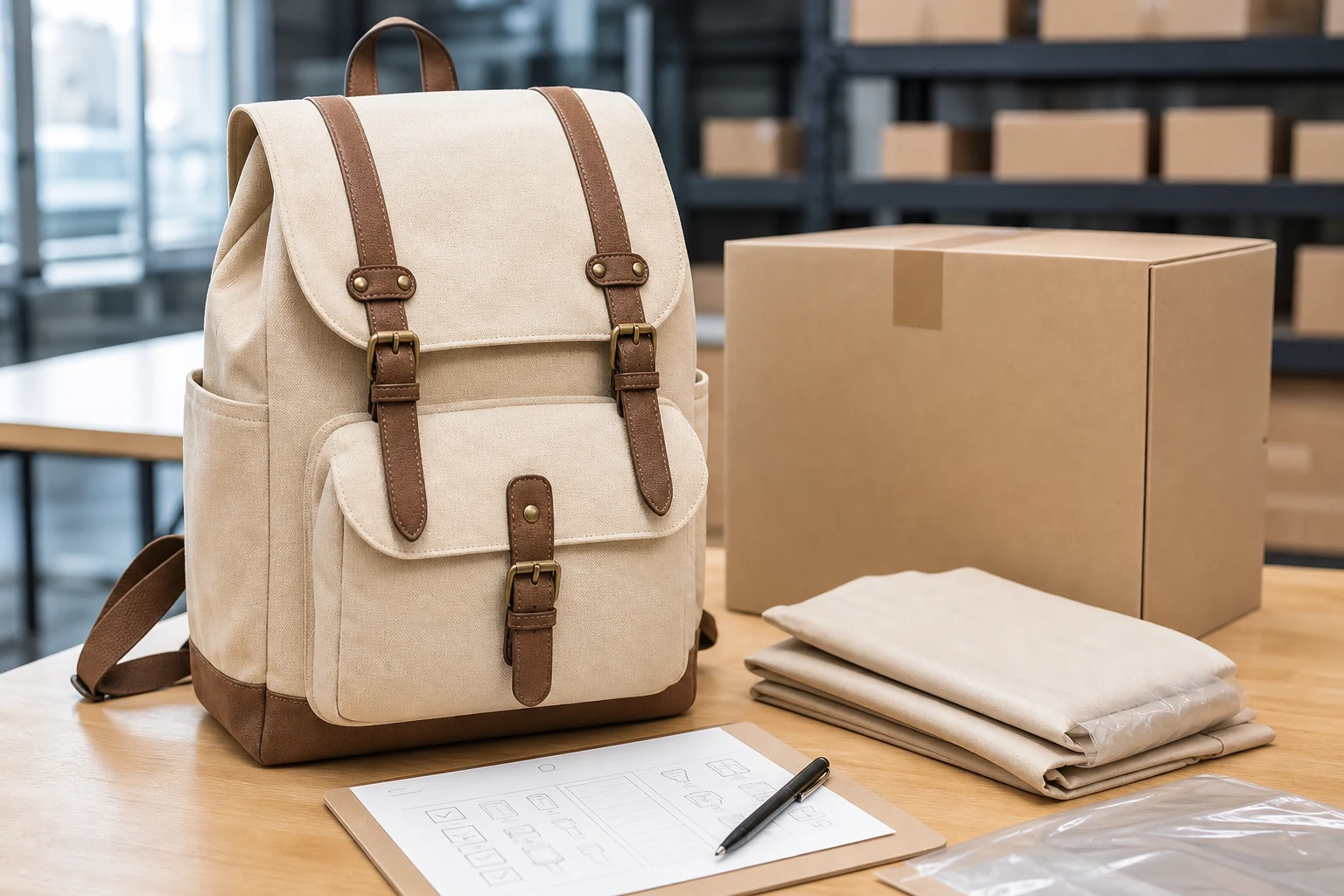
- Color and branding: Provide artwork, Pantone reference where applicable, placement drawings, and an approval route for strike-offs or logo samples.
For a broader construction discussion, see our custom backpack manufacturer guide. For a catalog starting point, the backpack supplier product page can help a buyer identify a base style before issuing a development brief, and campus programs that need a laptop compartment as standard usually start from our laptop backpack build.
How to Vet a College Backpack Wholesale Supplier
Ask every shortlisted supplier the same questions and record the answers beside the same sample specification. That produces a useful sourcing comparison without relying on generic claims.
| Supplier check | Evidence or answer to request | Decision use |
|---|---|---|
| Sample review | Photos and measurements against the buyer brief; physical sample where practical | Confirms whether the supplier understood the specification |
| Materials and trims | Material composition, fabric and lining references, zipper and hardware details | Lets the buyer compare like with like |
| Pattern and construction | Confirmation of pocket layout, reinforcement locations, sewing approach, and tolerance expectations | Identifies open technical decisions before bulk approval |
| Documentation | Current, product-specific documents requested for the destination market and the final material scope | Avoids treating a generic document as proof for a different product |
| Quality plan | Inspection points, approved sample retention, and how defects or substitutions are handled | Establishes a repeatable approval path |
| Commercial terms | MOQ, sample charge treatment, production route, packaging assumptions, and quotation validity | Makes the quotation comparable across suppliers |
If the backpack is marketed or intended for a regulated consumer-product scope, the importer and buyer should confirm the applicable requirements for the finished product and destination market. The U.S. Consumer Product Safety Commission explains that obligations depend on the product, intended user, and materials; its business guidance on testing and certification is a starting point, not a substitute for project-specific advice or documents.
Sample and Production Timing
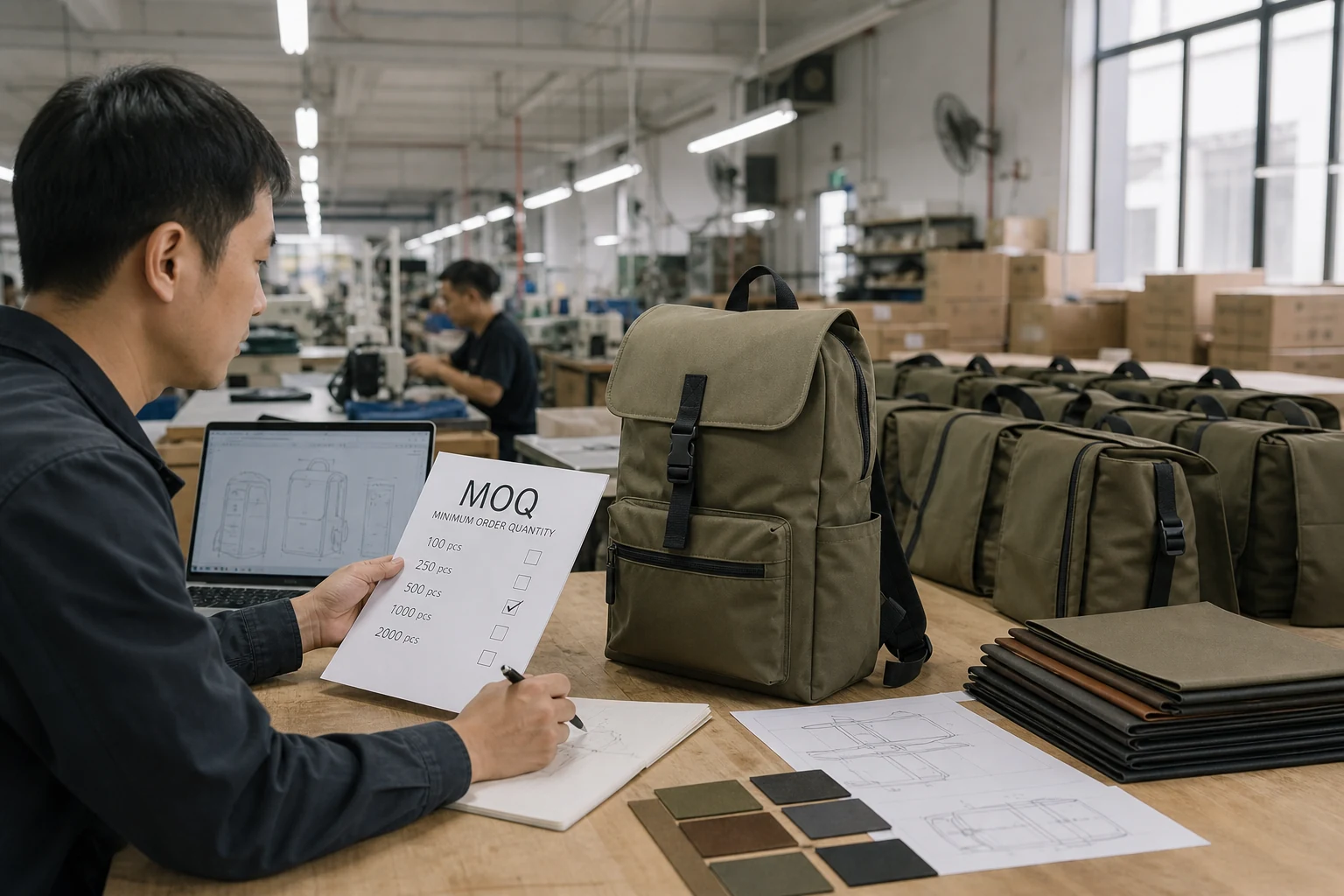
At Elandmake, the standard MOQ is 300 pieces per style and colorway. Sampling is generally 3–7 days. Light customization production is generally 15–30 days, while heavy customization—such as major structural changes, new tooling, or full new-product development—generally takes 20–45 days. These are planning terms, not a promise for every specification; confirm the route, approval dates, and any product-specific exception in the quotation.
Use the sample stage to approve the items that drive a repeatable backpack program:
- Match the sample against the signed buyer brief: dimensions, compartment layout, materials, trims, logo treatment, and packaging assumptions.
- Record changes in one consolidated revision list before approving bulk production.
- Confirm which reference sample, artwork file, and material/trim references control the bulk order.
- Confirm the inspection and documentation requests for the final product scope before shipment planning.
Sample fees can be deducted from the bulk-order payment after order confirmation. The applicable amount and freight are confirmed in the quotation.
RFQ Checklist for a College Backpack Program
Send the following with your inquiry so a supplier can provide a usable quotation:
- target use case and destination market;
- dimensions, capacity expectations, and laptop sleeve requirement;
- fabric, lining, colorway, and artwork references;
- pocket map, strap and back-panel requirements, plus preferred hardware;
- expected order quantity per style and colorway;
- logo, label, and packaging details;
- requested sample, approval, and target delivery milestones; and
- buyer-required documentation or inspection scope.
Ready to compare suppliers against one college-backpack brief? Contact Elandmake with your specification, reference images, quantity, and target market. We will confirm the relevant sample route, production assumptions, and quotation details for your project.