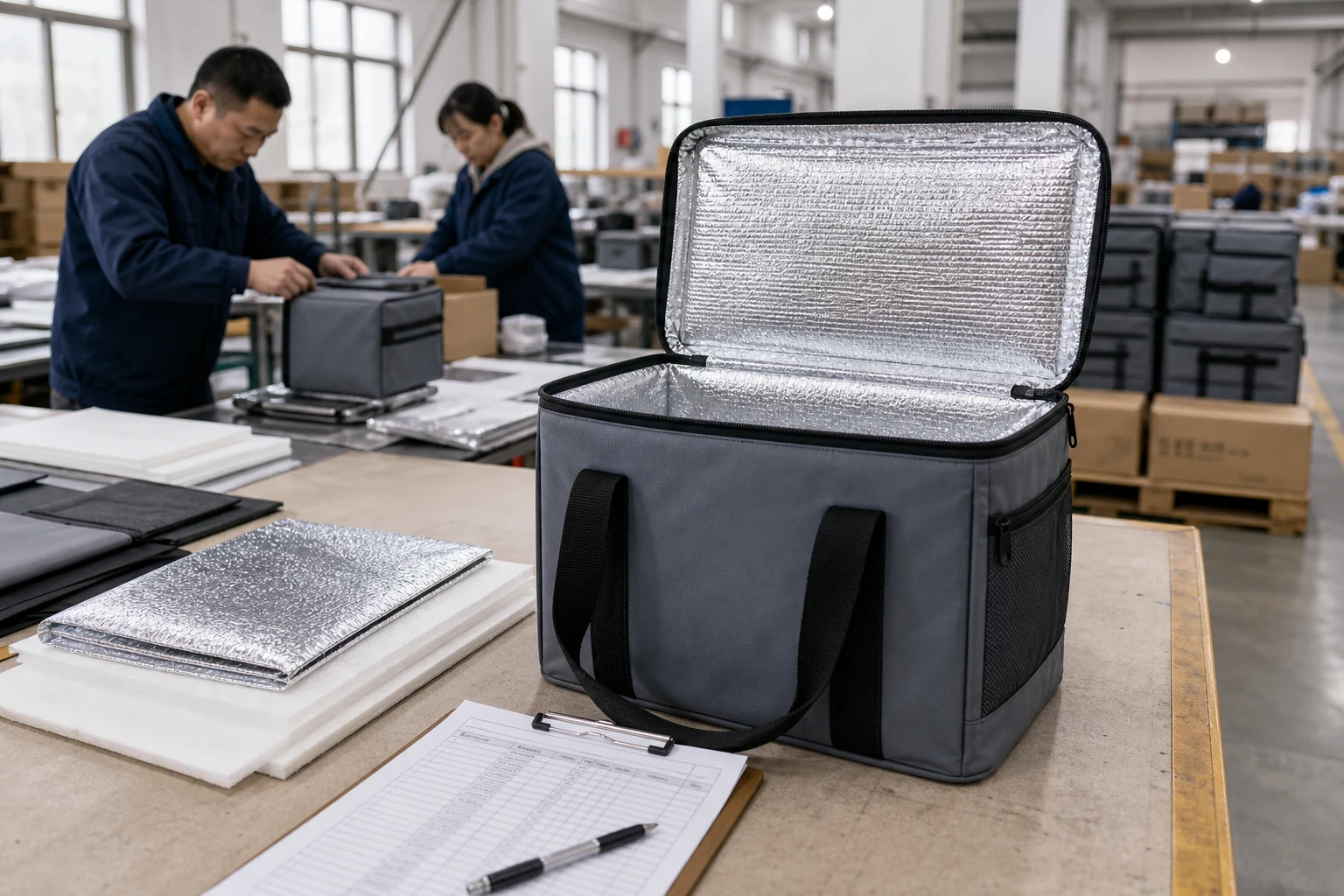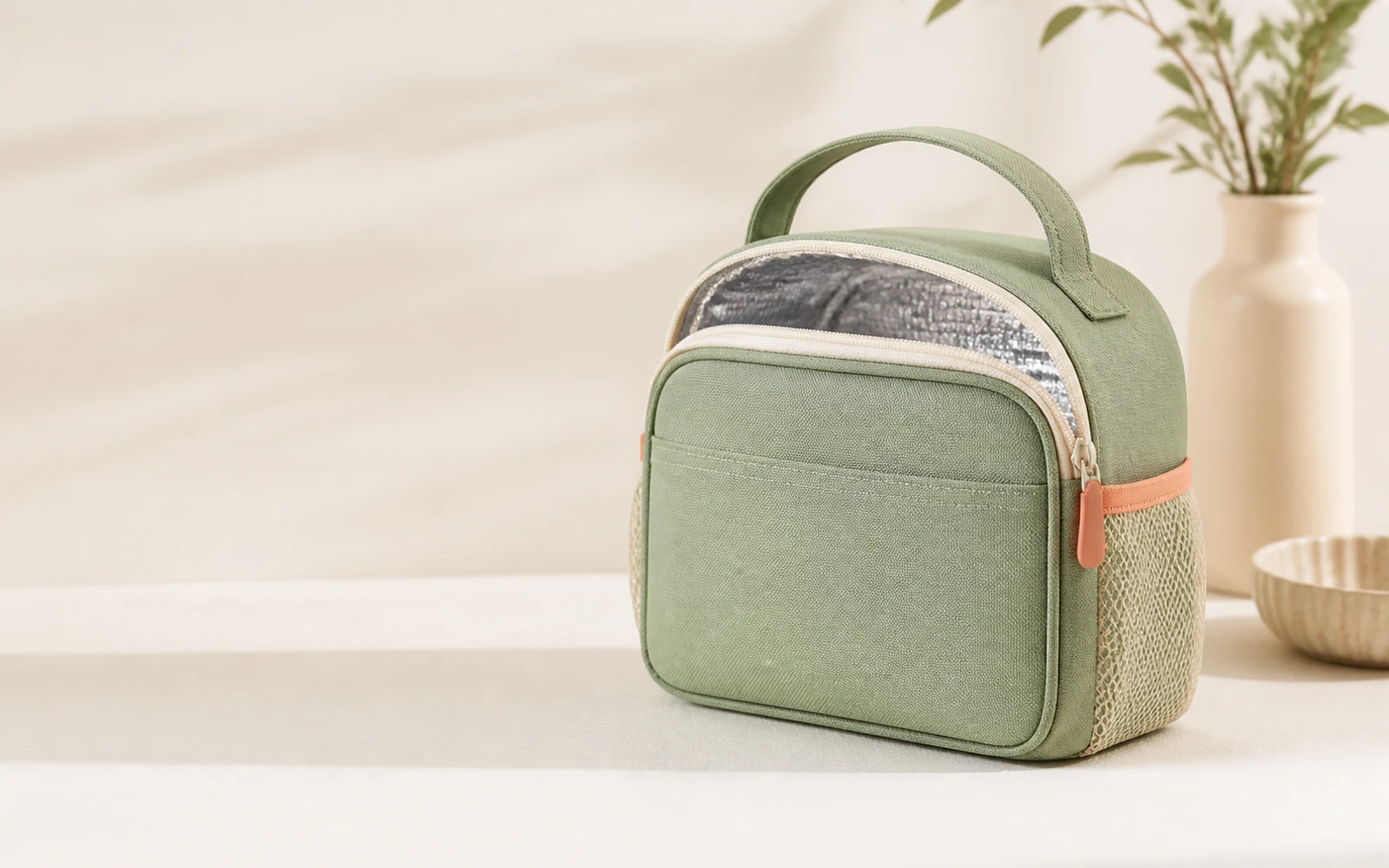
A kids insulated lunch bag manufacturer is easiest to evaluate when the buyer defines the age range, intended food-contact use, insulation target, cleaning expectations, and destination-market documentation before requesting a sample. Do not treat a generic cooler-bag specification or a supplier's catalog image as evidence that a finished children's lunch bag meets a particular requirement. Use one written brief, ask each supplier the same document questions, and approve the exact materials and construction that will go into bulk production.
Start With the Intended-Use Brief
The word “kids” can describe very different programs: a preschool lunch tote, a school-age backpack-style lunch bag, a licensed retail assortment, or a promotional item. Each route changes the practical decisions a buyer needs to make. Put the following information in the first RFQ so a manufacturer can quote and sample the same build.
| Decision | What the buyer should define | Why it changes the OEM brief |
|---|---|---|
| Intended user | Age range, school use, caregiver use, and sales market | Determines the product positioning, features, and documentation questions to raise |
| Food and drink use | Whether the bag will carry packaged food, drink containers, ice packs, or only external packaging | Keeps lining and food-contact questions tied to the actual intended use |
| Bag format | Tote, zip-top box, backpack-style lunch bag, or detachable lunch module | Sets the pattern, strap, closure, and volume decisions |
| Carry and cleaning | Handle or shoulder strap setup, wipe-clean expectation, and removable components | Identifies high-wear areas and practical construction details to review in the sample |
| Branding and retail | Artwork, logo method, labels, hangtags, packaging, and retailer data needs | Separates a light-customization program from a development-led project |
| Destination market | Country or region, required documents, and buyer-appointed test scope | Lets the importer and supplier confirm what is actually relevant to the finished product |
For a wider range of insulation formats, see our cooler bag OEM factory wholesale guide. This article stays focused on the buyer's children’s lunch-bag brief and the evidence to request for that exact project.
Choose Insulation and Lining by Use Case
Insulation is not a universal performance claim. The right construction depends on the bag's size, the contents, the buyer's handling routine, and the conditions the buyer plans to validate. Ask for material references and prototype observations rather than approving a claim such as “keeps food cold all day.”
| Design question | Options to compare in the brief | What to verify at sample stage |
|---|---|---|
| Insulation layer | Foam type, thickness range, foil or non-foil construction | Coverage around the body and lid, seam allowance, and whether the shape stays practical for the intended user |
| Inner lining | Buyer-selected lining material and finish | Exact material reference, color, seams, wipe-clean behavior, and how the lining is fixed at openings |
| Closure | Zipper, hook-and-loop, fold-over, or other closure | Ease of opening, closure alignment, pull and binding finish, and any small components in the approved design |
| Exterior | Woven, coated, laminated, or other buyer-selected outer material | Artwork result, color reference, abrasion-prone corners, and cleanup expectations |
| Carry points | Top handle, webbing, shoulder strap, or backpack straps | Stitching, reinforcement, adjustment hardware, and how the bag carries its intended contents |
| Base and structure | Soft base, insert, or shaped side panels | Stability, edge finish, packing shape, and how the base performs during the buyer's own evaluation |
If your program starts from an existing insulated silhouette, our insulated lunch bag platform is the usual reference build for a school-age program, and the kids shoulder bag covers the carry-format variant; our cooler bag range lists related insulated formats before the detailed RFQ. The final sample—not a category image—should be the reference for the approved material stack and construction.
Ask Safety and Documentation Questions Early
Documentation should be specified by the final product, destination market, intended age range, and material scope. A supplier's general certificate, an older report, or documents for a different bag construction should not be treated as proof for this project.
For U.S. programs that are classified as children’s products, the buyer or importer should determine applicable requirements with its compliance team or qualified advisor. The U.S. Consumer Product Safety Commission explains that children’s products subject to applicable rules require testing and a written Children’s Product Certificate; the responsible manufacturer or importer issues that certificate based on the relevant evidence. Review the CPSC’s children’s products guidance and CPC FAQ with the actual product scope in hand.
For food-contact questions, begin with the intended contact and the final lining or component composition. The U.S. Food and Drug Administration’s food-contact substances information is a useful starting point for a buyer’s document request; it is not a pass conclusion for a specific lunch bag.
Ask the supplier or testing partner these questions before bulk approval:
- What exact finished-product materials, colors, prints, coatings, trims, and components does each document cover?
- Which destination market and intended age range does the buyer want the documentation to address?
- Is the document current, project-specific, and traceable to the material or finished-product reference used in the approved sample?
- Who is responsible for defining the applicable requirement set, arranging any needed testing, and issuing any required certificates?
- What production or batch information will let the buyer connect the final goods to the approved materials and records?
These questions do not determine legal compliance. They make sure the buyer can identify gaps before issuing a production approval.
Sample Checklist for a Kids Lunch Bag Program
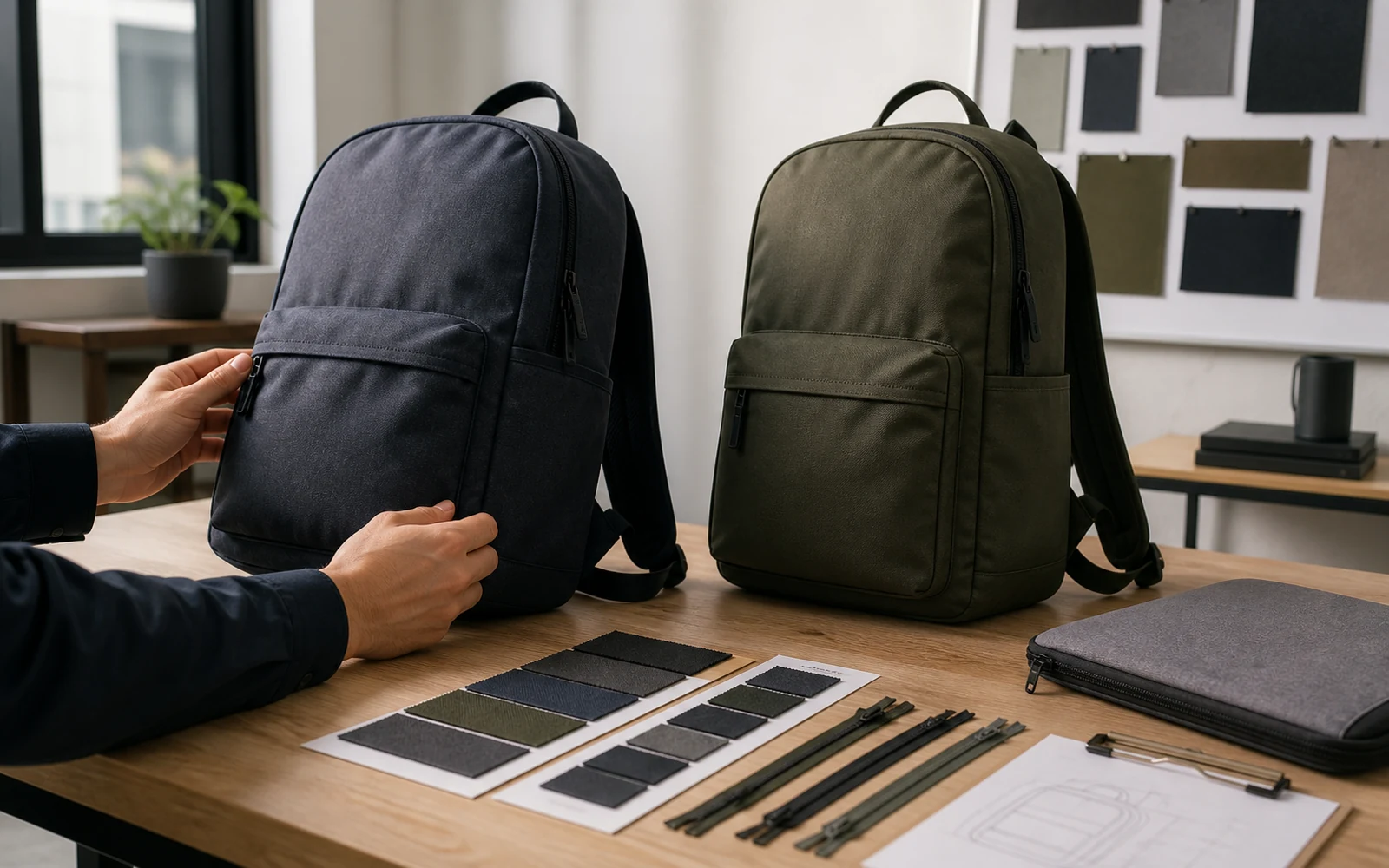
Sampling turns the written brief into an approvable physical reference. Include a revision log and resolve changes in one place so that a material substitution, zipper change, or altered logo placement does not get lost between sample rounds.
- Check dimensions, internal volume, closure, and carry arrangement against the intended user and contents.
- Compare exterior, insulation, lining, trim, and artwork to the material references in the approved brief.
- Review binding, seams, handle or strap attachment, zipper operation, and the finish of every edge or small component in the proposed design.
- Confirm the packaging, label placement, retail artwork, and any buyer-required tracking or document references.
- Record the exact sample revision, material references, and unresolved questions that must be closed before bulk production.
At Elandmake, the standard MOQ is 300 pieces per style and colorway. Sampling is generally 3–7 days. Light customization production is generally 15–30 days, while heavy customization—such as major structural changes, new tooling, or full new-product development—generally takes 20–45 days. Treat these as planning terms and confirm the selected route, approvals, and any project-specific exception in the quotation.
Sample fees can be deducted from the bulk-order payment after order confirmation. The applicable amount and freight are confirmed in the quotation.
RFQ Checklist for an OEM Lunch Bag
Send one consolidated pack to each prospective manufacturer:
- intended age range, market, user scenario, and planned contents;
- dimensions, target form factor, compartment layout, and carry setup;
- exterior, insulation, lining, trim, color, and artwork references;
- closure, base, reinforcement, and cleaning expectations;
- quantity by style and colorway, plus desired sample and delivery milestones;
- packaging, labels, and buyer-requested documentation or testing scope; and
- a clear approval process for the sample, artwork, material changes, and bulk-production reference.
For an OEM program that needs a defined sample route and specification review, Elandmake’s services page outlines the customization workflow. Ready to source a kids insulated lunch bag against one complete brief? Contact Elandmake with your reference images, quantity, target market, and document requirements. We will confirm the relevant sampling route, production assumptions, and quotation details for your project.