Every de minimis tariff bag importers strategy written before 2026 is now obsolete. The $800 duty-free exemption for shipments from China was eliminated, and by February 2026 the suspension was comprehensive: every import from China, regardless of value, requires formal customs entry and pays the full tariff schedule. Daily de minimis parcel volume collapsed by roughly 85%, from nearly 4 million packages a day to around 600,000. If your bag business was built on small direct-from-China parcels, the cost structure that made it work no longer exists. Here is the playbook that replaces it.
What Actually Changed, and When
The de minimis exemption, Section 321 of the Tariff Act, once let many shipments under $800 enter the US duty-free with minimal paperwork. That treatment ended for China and Hong Kong origins in May 2025, and duty-free de minimis treatment was then suspended for shipments from all countries effective August 29, 2025. Routing Chinese-origin goods through another country does not change their origin and can create serious customs-enforcement risk. Check CBP's current all-country de minimis guidance and its China-specific guidance before finalizing a landed-cost model.
The New Math: Parcel Drip vs Bulk Ocean
With duties applying at any value, the per-unit economics invert decisively in favor of consolidated bulk shipments:
| Cost Component | Parcel Import (post-2026) | Bulk Ocean (MOQ 300+) |
|---|---|---|
| Duty treatment | Full tariff per parcel | Full tariff, one entry |
| Customs entry cost | Per package | Amortized across the order |
| Freight per unit | $8-20 (air parcel) | $0.30-1.50 (ocean) |
| Unit FOB price | Retail-adjacent | Factory-direct |
| QC opportunity | None | Pre-shipment inspection |
| Landed cost predictability | Low | High |
The pattern that wins in 2026 is fewer, larger, better-negotiated orders. Every percentage point you negotiate on FOB price now compounds through the tariff calculation into a real landed-cost difference. That makes factory-direct sourcing, without trading-company markup, more valuable than it has ever been. Our China factory vs local manufacturer cost analysis quantifies the gap that remains even after tariffs.
Why MOQ 300 Is the New Sweet Spot
Bulk used to mean container-scale risk. It no longer has to. A 300-piece MOQ, the standard at Elandmake, clears the threshold where ocean freight and single-entry customs amortization start working, while keeping inventory risk at a level a growing brand can carry. Understanding how MOQ interacts with pricing tiers is worth doing before you sit down to negotiate; see our explainer on what MOQ means in bag manufacturing.
Negotiating Terms in the Tariff Era
Three contract levers matter more now. First, DDP (Delivered Duty Paid) quotes: asking the factory to quote landed cost shifts tariff administration to parties who handle it daily, and makes supplier comparisons honest. Second, price-breaks at 500/1000/3000 units so your reorders capture scale as you grow. Third, payment structure: the standard 30% deposit, 70% against inspection protects cash flow while the goods absorb the longer ocean timeline. Ask for a transparent quote that separates FOB, freight, and duty; opaque "all-in" pricing usually hides margin in the duty line. For the full unit-economics breakdown, read our custom bag manufacturing cost guide.
Restructuring a Parcel-Based Business
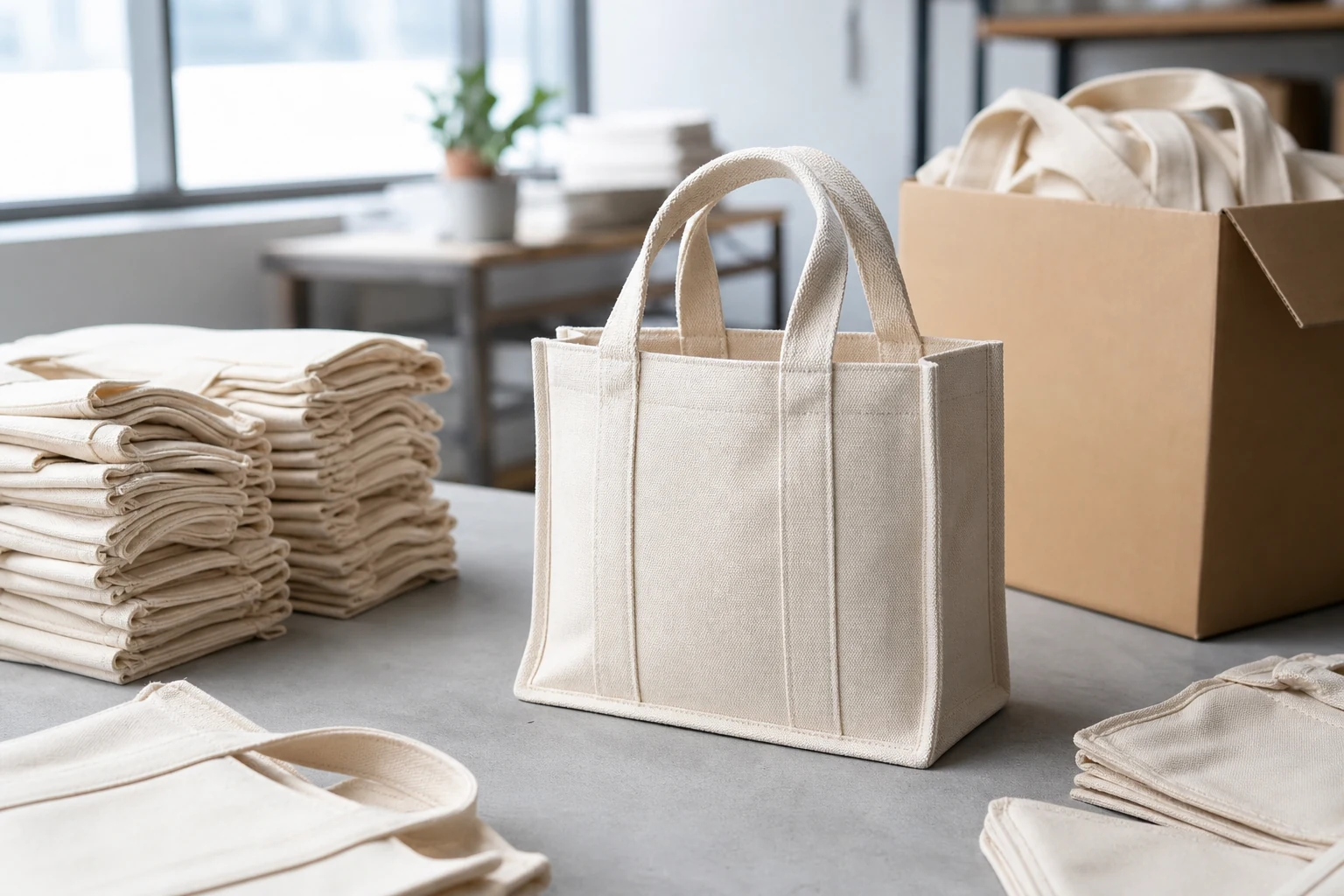
If you ran a dropship or small-parcel model, the migration path looks like this: consolidate your three to five best-selling SKUs into a single bulk order, start from an existing platform such as our 12oz heavy-duty canvas tote so the first consolidated run does not also carry pattern-development cost, use a US 3PL for fulfillment instead of China-direct parcels, and reinvest the freight savings into quality upgrades that parcel-model margins never allowed. That means heavier face fabrics such as 600D or 1680D polyester, YKK zippers, reinforced bar-tacked seams, and a pre-shipment inspection run to an agreed AQL standard rather than shipping blind. Ask for sample and production timing up front; plan 3–7 days for a pre-production sample, then 15–30 days for light customization or 20–45 days for heavy customization. If you are moving from a generic listing to a defended brand, this is also the moment to lock in private-label branding and custom logos so the product carries your identity, not the factory's. Buyers who made this move in 2025 report not just restored margins but better review scores, because bulk production at a certified factory comes with the QC that dropship never had.
The Strategic Upside Nobody Mentions
The de minimis change hurts most the competitors who never invested in supply chains: ultra-cheap parcel sellers flooding listings with unvetted product. Their cost advantage is gone. For brands willing to order at modest bulk from a BSCI and SGS certified factory, 2026 is the best competitive environment in a decade. The playing field now rewards exactly the quality and compliance discipline that certified manufacturing delivers.
Ready to restructure your sourcing for the post-de-minimis era? Contact Elandmake for a free DDP quote — our team responds within 24 hours.