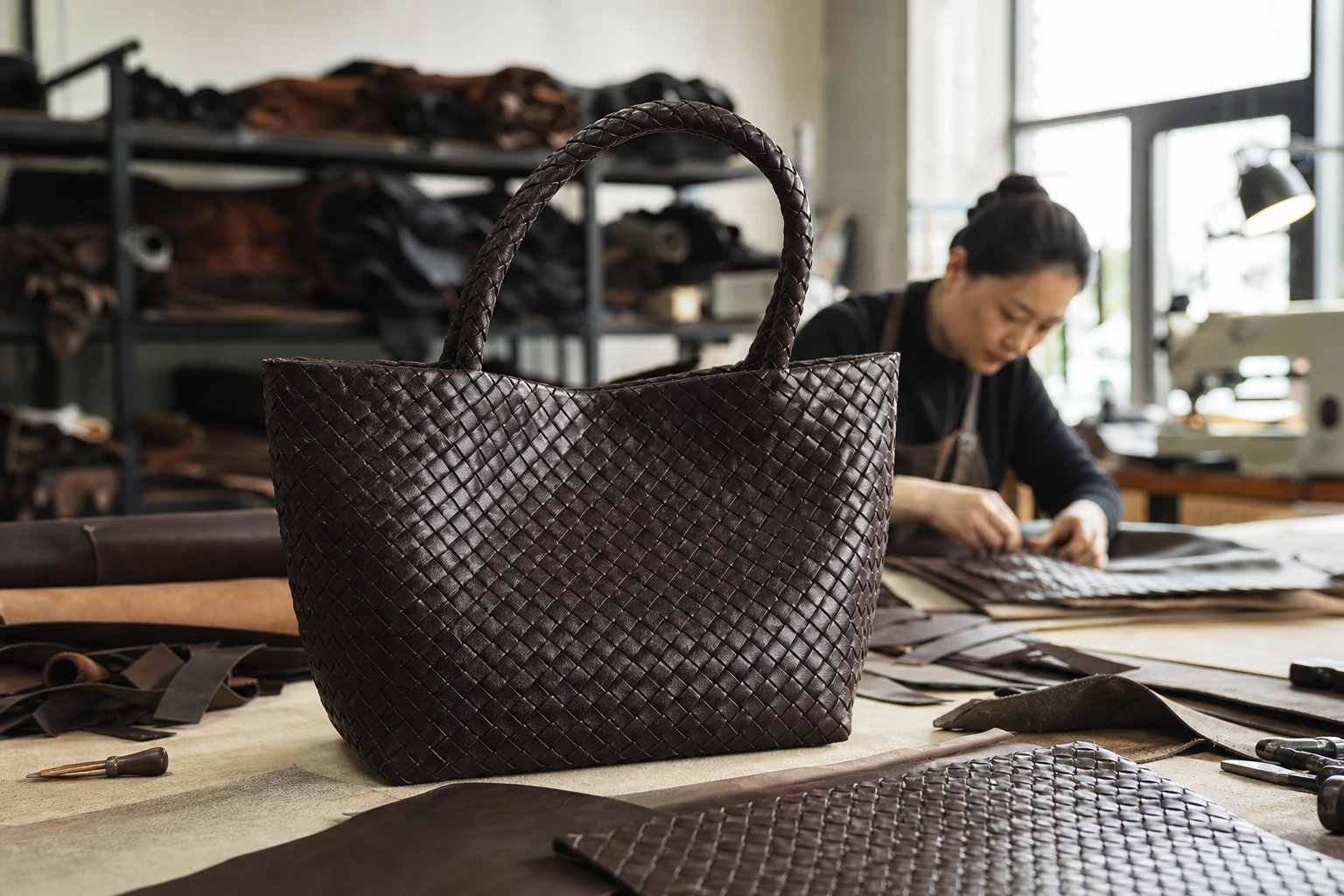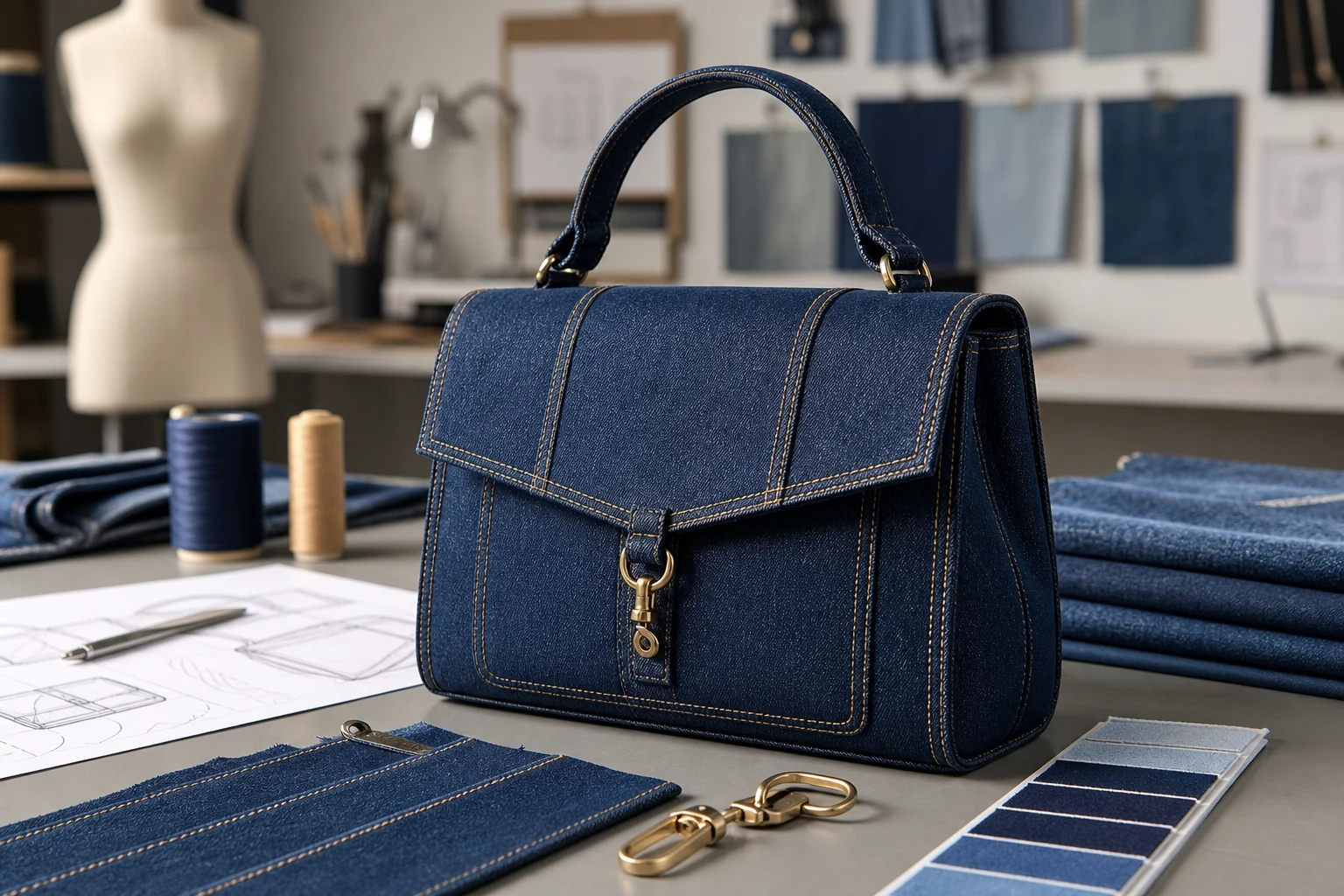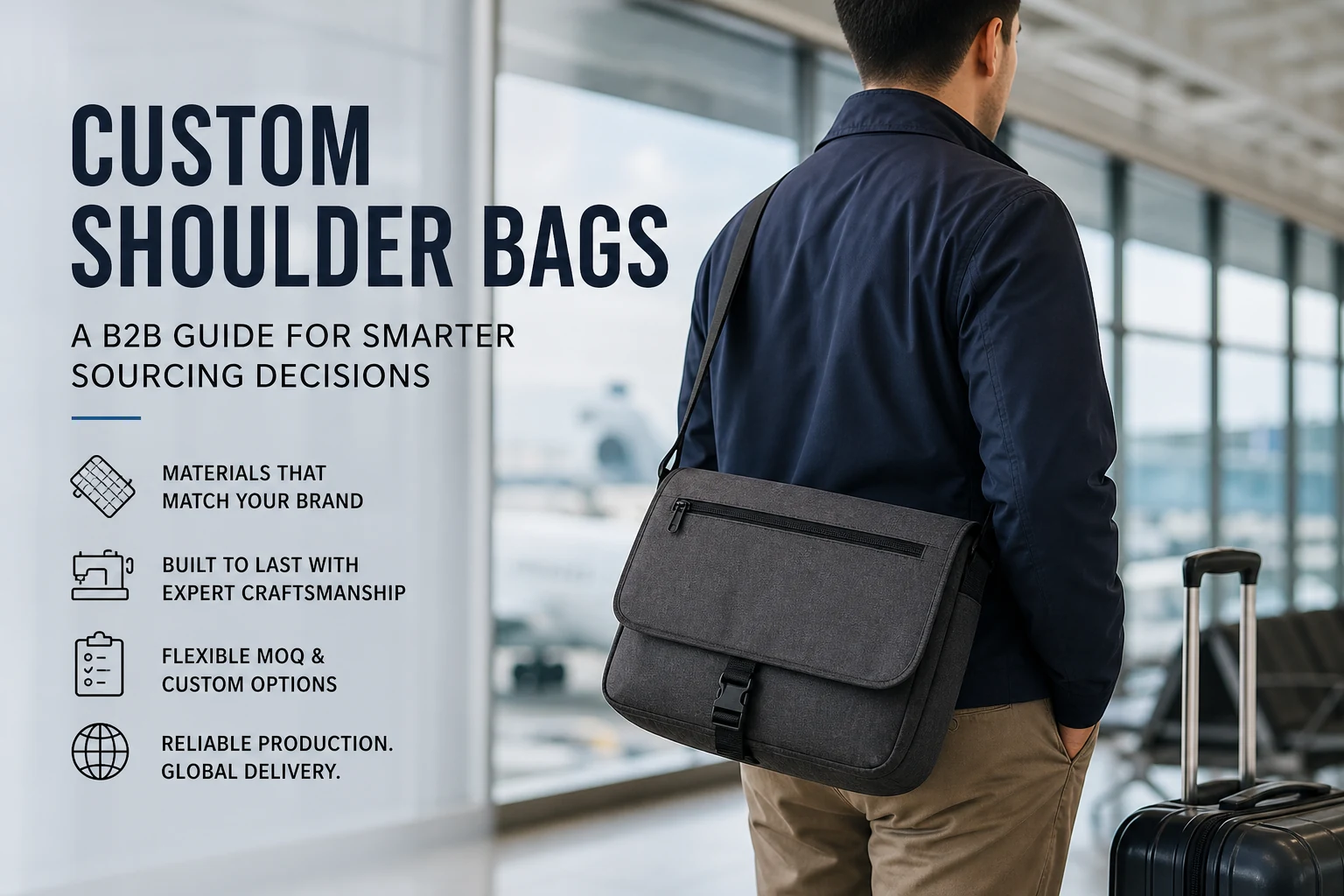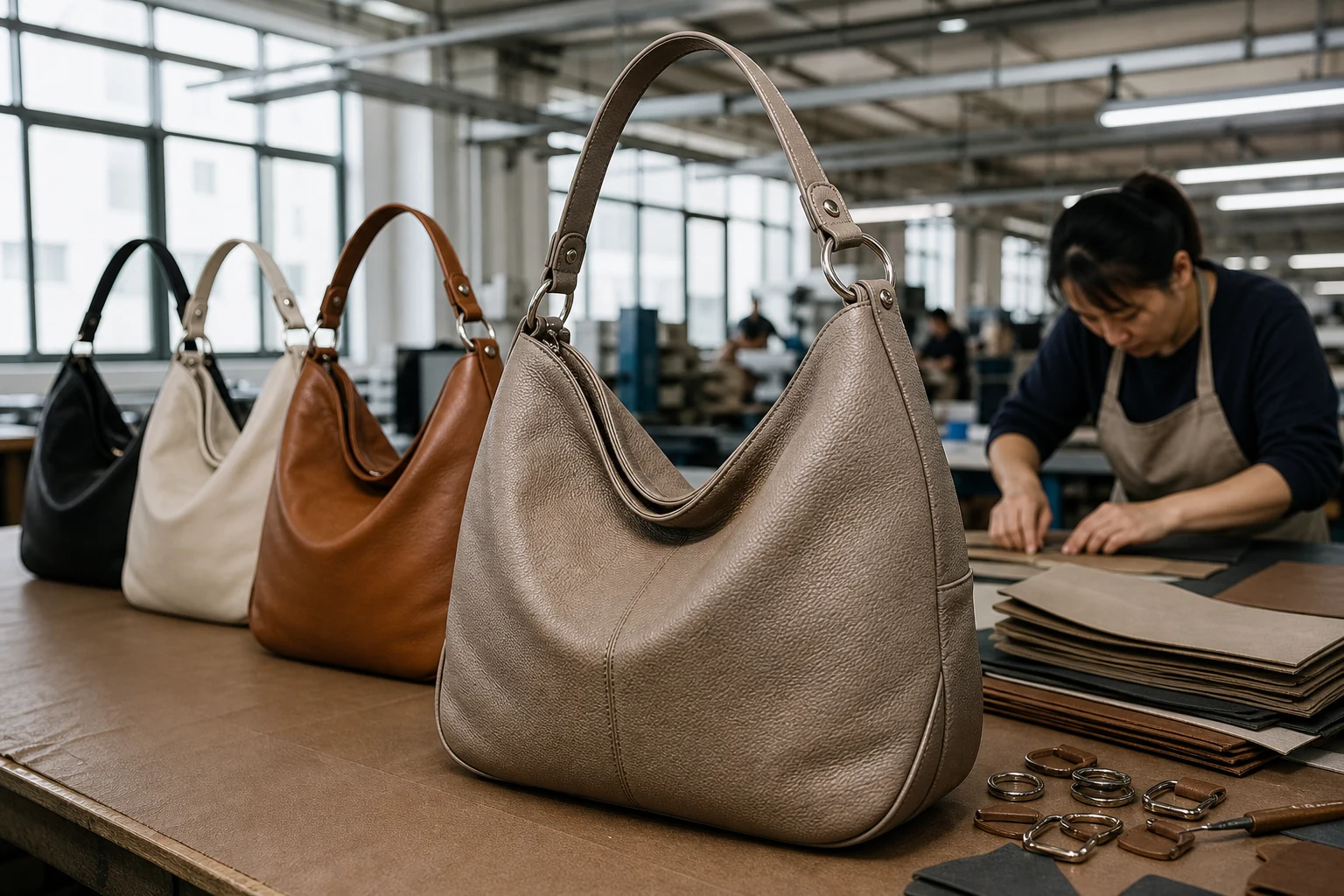
If you are sourcing Wholesale Hobo Bags in 2026, you are buying a supply chain, not just a shape. Most trading companies show you polished showroom samples. As a factory owner, I see what actually happens during mass production: bleeding dyes, snapping shoulder straps, and hardware that oxidizes before the goods clear customs. Scaling a brand means understanding how these bags are really built on a high-output line, and where corners get cut when nobody is watching the floor.
Structural Integrity: Why "The Slouch" Fails in Bulk Production
The biggest mistake B2B buyers make is prioritizing aesthetics over structural engineering. A hobo bag is meant to slouch, but without proper internal reinforcement that slouch turns into a permanent, ugly deformation after three weeks of retail shelf life.
In our Jinhua facility, we reinforce the base of our Wholesale Hobo Bags with 0.8mm internal stabilizers. We also run a 24-hour static load test of 5kg to 8kg on every new batch. If your current supplier isn't using computerized box-stitch patterns (3cm x 3cm) at the strap attachment points, your return rate will climb the moment a consumer actually loads the bag in real-world use. Because a hobo hangs from a single shoulder, that strap junction carries the whole weight, so it is the first place a weak build shows.
Material Engineering: Leather & Canvas Hobo Bag Materials
Choosing the right Leather & Canvas Hobo Bag Materials separates a high-margin boutique item from a clearance-bin headache. For the 2026 season, professional buyers are dropping cheap PU in favor of technical durability.
- Top-Grain Leather : For premium orders, we recommend a 1.2mm - 1.4mm pebble grain. This thickness gives the natural drape the hobo silhouette needs.
- High-Density Textiles : For canvas versions, skip standard 8oz cotton. We run 16oz Waxed Canvas or 1200D Ballistic Nylon so the bag keeps a premium feel through heavy handling.
- Lining Specs : Demand 210D Polyester or TC Cotton. Many factories swap this for 170T to save $0.30 per unit — don't let them. That thin lining shreds the first time a customer drops keys inside.
The same material discipline is what keeps custom shopper bags from tearing at the seams, and it applies just as much to a hobo. We also spec YKK zippers and solid metal hardware on export orders rather than the unbranded pulls that fail after a few hundred cycles. If your program is closer to a structured custom shoulder bag, the reinforcement changes, but the same audit questions apply. Two stocked platforms cover most hobo briefs: the vegan leather hobo tote for the soft-drape version, and the paper straw hobo handbag for warm-season assortments.
Logo Durability: Custom Hobo Bags with Logo
When you order Custom Hobo Bags with Logo, the application method has to be chemically compatible with the substrate. I see too many "manufacturers" using standard silk-screen printing on oily leathers; it cracks and peels within months.
For professional-grade Custom Hobo Bags with Logo, we suggest Heat Debossing with a depth tolerance of +/- 0.2mm. If you prefer metal branding, your hardware should undergo a 48-hour Salt Spray Test. That prevents the finish from pitting or turning green in humid warehouses. Private-label and custom branding are what turn a generic item into a recognizable shelf asset, so the logo has to survive the supply chain, not just the photoshoot.
Risk Management: Bulk Hobo Bags Compliance (REACH & Prop 65)
In 2026, Bulk Hobo Bags Compliance is your primary shield against legal liability. If your shipment contains Lead, Phthalates, or Azo dyes, customs won't just delay the container — they can destroy it.
We manage Bulk Hobo Bags Compliance by running every batch through our in-house lab before final QC. All PVC backings we use are Phthalate-free and every zipper is Nickel-free. When sourcing in bulk, always demand a recent SGS or Intertek test report tied to your specific production batch, not a generic certificate from last year. If you are new to this side of the trade, our sourcing guide walks through what documentation to ask for before you wire a deposit.
The Kevin Factory Truth: Spotting "Quality Shortcuts"
Most suppliers claim a stitch density of "8-10 stitches per inch," but they often drop to 5 or 6 to speed up the line. This saves them thread and labor and ruins the seam strength. At Elandmake, we use automatic laser cutting to hold a tolerance of +/- 2mm, and every piece passes through an X-ray needle detector plus an AQL inspection before it ships. If your supplier doesn't have an X-ray machine on-site, they are a workshop, not a factory.
For planning, our MOQ starts at 300 pieces per style, sample lead times run 3-7 days, and bulk production is typically 15–30 days for light customization or 20–45 working days for heavy customization depending on materials and print method. That timeline matters if you are building for a retail launch or an Amazon FBA restock window, where a slipped ship date costs more than the bags themselves.
"I'm Kevin, founder of Jinhua Yilan Industry (Elandmake). We operate a 3,000 sqm BSCI-certified factory in Jinhua with 100+ production and technical staff. If you want straight talk and real factory prices, send me your tech pack for a free audit."