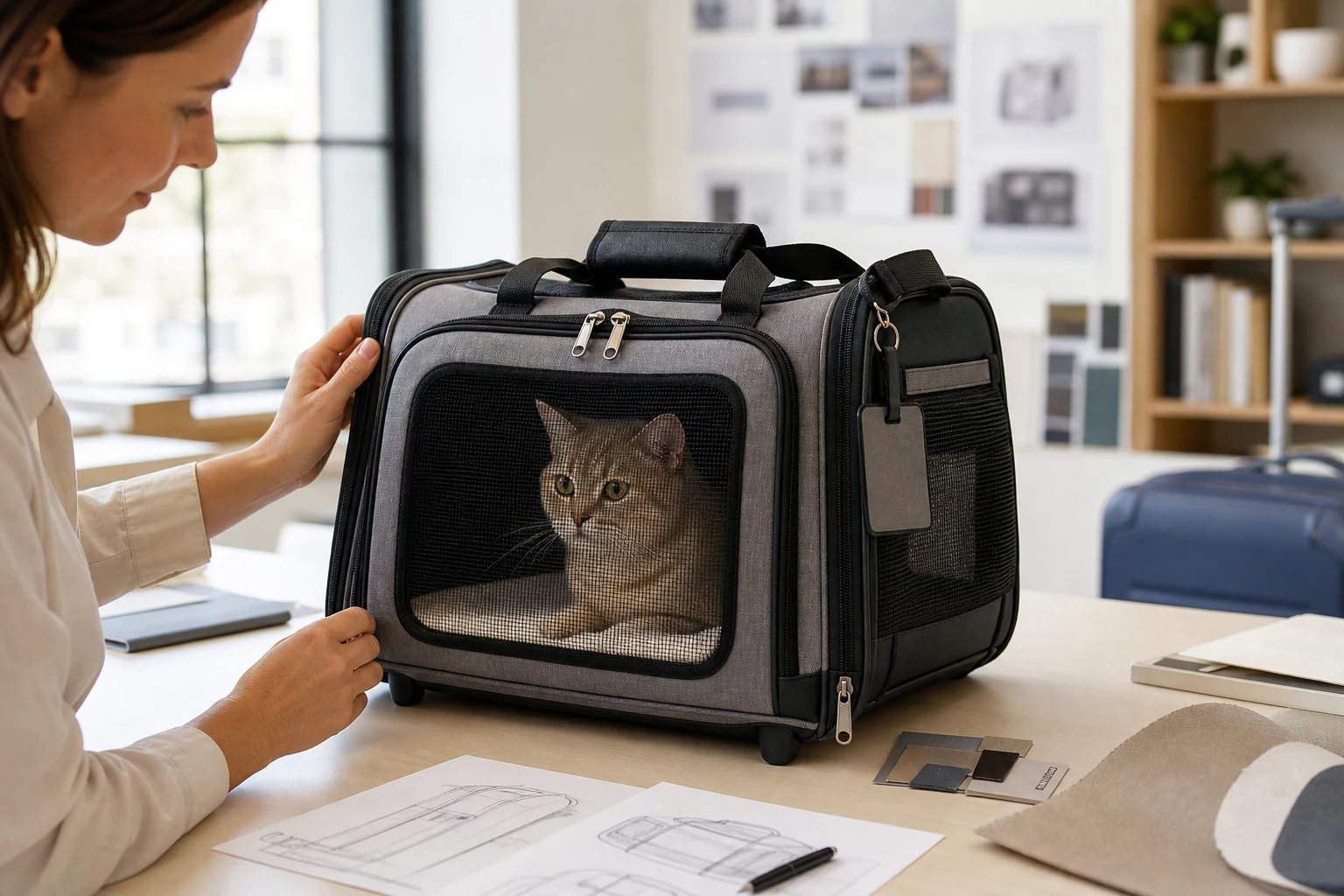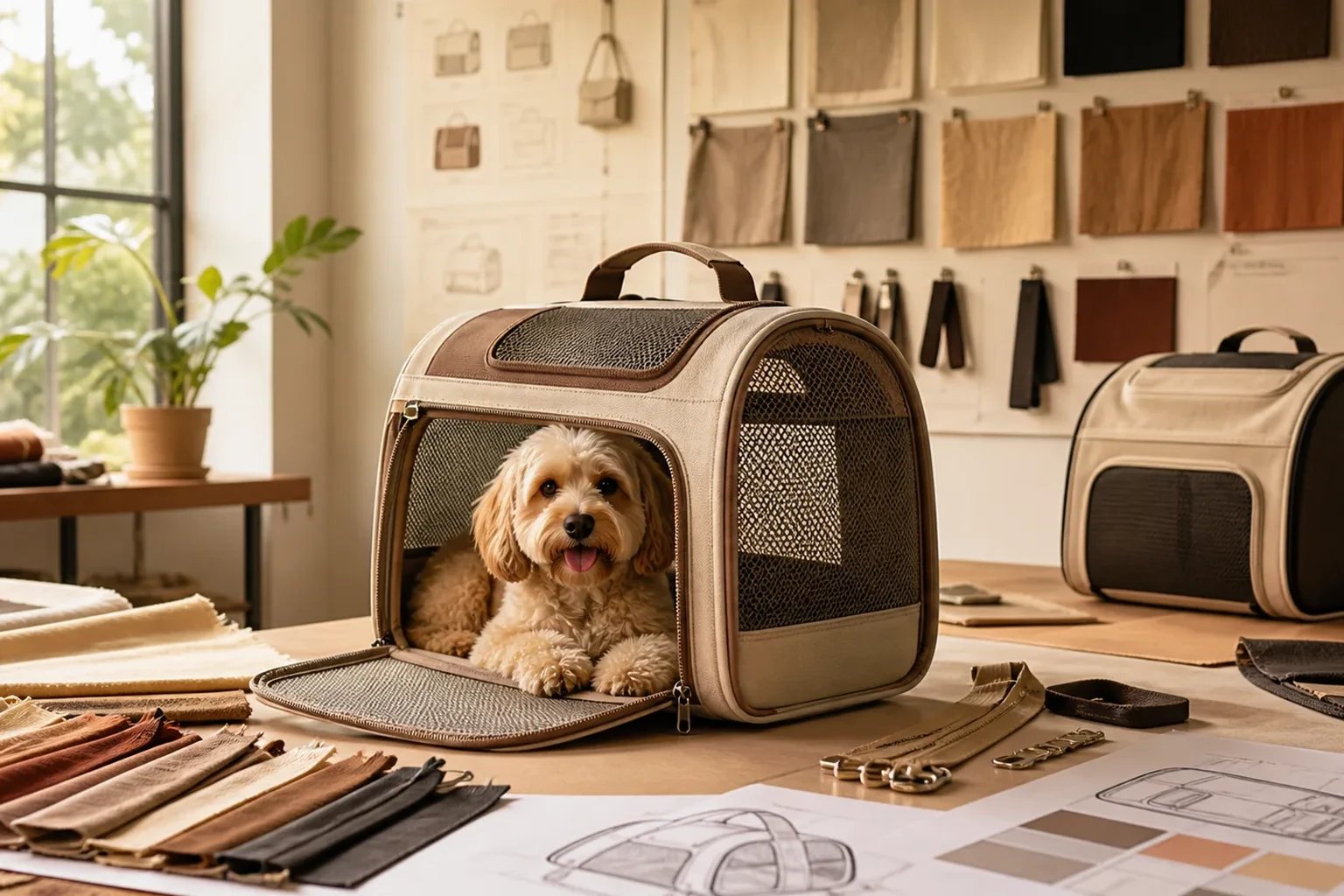
A small-pet carrier must be specified for the species, adult measurements, animal count, journey and climate, then checked for usable space, ventilation, base stability, secure closures and chew-accessible edges. IATA does not certify carrier brands or models, and airline acceptance for guinea pigs or other small animals must be confirmed for the current species, route and operator.
A small pet carrier should not be a scaled-down cat bag. Guinea pigs, rabbits and other small companion animals differ in body shape, heat tolerance, chewing behavior and transport acceptance. A responsible OEM brief starts with the species and journey, then builds the enclosure around welfare, escape resistance and cleaning.
Before requesting a quote, identify the animal, expected adult size and weight, number of animals, trip duration, transport mode and destination. Those inputs matter more than a generic “airline carrier” label.
| Design area | Buyer should define | Sample should demonstrate |
|---|---|---|
| Internal space | Species, animal count and adult measurements | Usable floor area and height without hard obstructions |
| Ventilation | Route, climate and acceptable panel locations | Cross-flow that remains open when the bag is carried |
| Base | Bedding, absorbent pad and cleaning method | Stable support with a removable, cleanable layer |
| Closures | Opening direction and escape-risk controls | Secure zipper operation without exposed snag points |
| Interior edges | Chewing behavior and contact zones | Bound or protected edges with no easy access to foam |
Write a species-specific carrier brief
The factory cannot infer welfare requirements from one marketplace photo. Record whether the carrier is for a guinea pig, rabbit, hamster or another animal; whether animals travel singly or together; and how the customer will use the product. A short veterinary visit, car journey and commercial flight create different constraints.
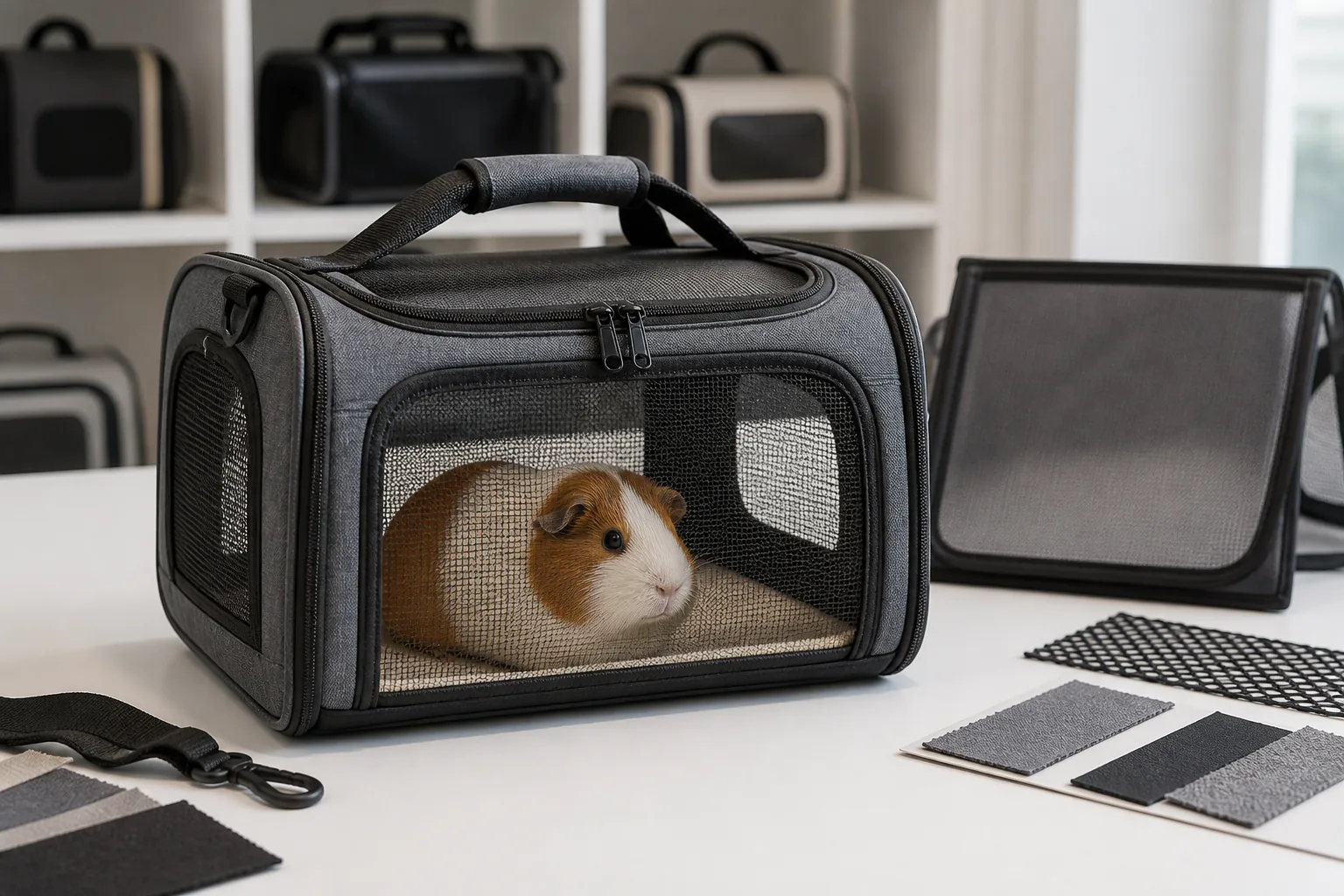
Our guinea pig carrier provides a starting form for development, but the production specification still needs the buyer's animal range and route. Do not use “small pet” as if every species has the same temperature, space or handling needs.
Keep ventilation open in the carried position
Mesh area is useful only when it remains exposed. A panel pressed against the wearer's body, luggage or a seat wall may contribute little airflow. Place openings on more than one face and check the filled carrier in its real orientation. The structure should stop soft panels from collapsing inward onto the animal.
Mesh also needs a balance between airflow and resistance to claws or teeth. The tech pack should name the material, opening structure, attachment seam and protected edge. A denser mesh is not automatically safer if it sharply reduces airflow, while a very open mesh can be easy to damage. Approve the exact production-intent mesh on the physical sample.
Design the floor for stability and cleaning
Small animals need a stable base. Specify a board or structural insert that does not create a sharp edge, plus a removable cover or pad suited to the intended cleaning method. The finished floor should remain reasonably level when the handles are lifted and the expected load is inside.
Avoid exposed foam or raw binding where an animal can chew it. Check corners, zipper ends, mesh seams and the gap around removable inserts. The buyer should also define how replacement pads or liners will be supplied and labeled.
Treat airline acceptance as route-specific
IATA does not certify pet-carrier brands or models, and there is no universal cabin size that applies to every airline and animal. Its current Traveler's Pet Corner tells travelers to check government and airline requirements, while the operating airline makes the final acceptance decision.
Species restrictions are especially important for animals other than cats and dogs. A carrier that fits under a seat can still be refused if the airline does not accept that species or requires a different transport arrangement. Before sample approval and again before travel, confirm the species, route, aircraft or service conditions, and current airline rule in writing. Do not market a small-pet carrier as universally “IATA approved” or “airline approved.”
For the broader framework, see our IATA pet carrier requirements guide. It explains why current rules, animal measurements and operator variations have to be part of the production brief.
Test the sample as an enclosure, not a handbag
Sample approval should cover more than appearance. Use the declared test load to check handle and strap attachment, base deflection, panel collapse and closure security. Operate every zipper, inspect the inside by hand for sharp points, and examine whether an animal can reach foam, loose thread, zipper tape or an unprotected seam edge.
Cleaning also belongs in the test. Remove and reinstall the base and pad, follow the intended care method, and confirm that the materials do not distort in a way that blocks the carrier or exposes an edge. Product-level chemical or durability testing must match the chosen materials and destination; a social or factory audit does not replace it.
Move from sample to controlled production
Elandmake's standard terms are MOQ 300 pieces per style and colorway, sampling in 3–7 days, production in 15–30 days for light customization, and 20–45 days for heavy customization. A major enclosure redesign, new structural tooling or full product development is heavy customization. Sample fees can be deducted from the bulk-order payment after order confirmation; the quotation confirms the amount and freight.
The purchase specification should freeze the species and weight range, internal and external dimensions, base structure, mesh, closures, chew-protected details, materials, label wording, packaging and inspection method. Keep the approved sample available during production and final inspection.
Frequently Asked Questions
Can a cat carrier be reused for guinea pigs?
Only after a species-specific review. The size, ventilation layout, base, internal edges and closures must suit the intended animal and journey; simply reducing the dimensions of a cat carrier is not enough.
Is there an IATA-certified guinea pig carrier?
No. IATA does not certify or endorse carrier brands or models. The buyer and traveler must confirm current government, airline, route and species requirements, and the airline makes the final acceptance decision.
What should be tested on a small pet carrier sample?
Check usable internal space, ventilation in the carried position, base stability, panel collapse, handle and strap attachment, zipper security, chew-accessible edges and cleaning. Test against the declared animal and route rather than a generic product label.
Send the species, adult measurements, route and reference product through the Elandmake contact form to start a small-pet carrier specification and quotation.